|
|
|
|
|
|
|
|
|
|
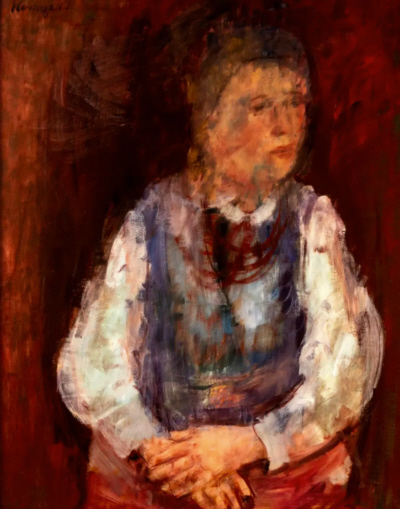
Joachim Weingart - "Young man in a blue vest" - circa 1930 -> Click on image |
|
|
|
|
|
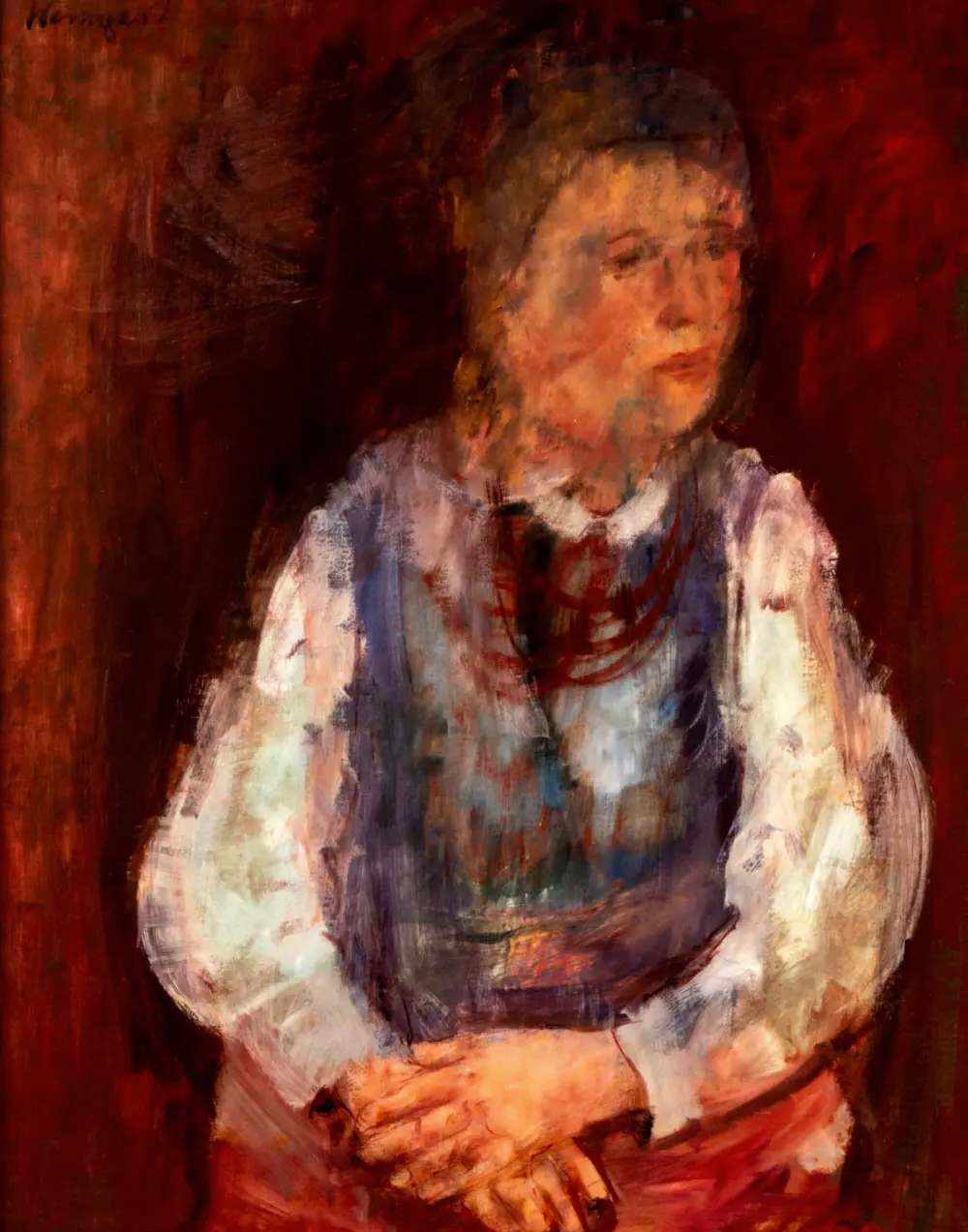
The old year ended for us with an absolute highlight.
Just before Christmas, we traveled to Paris to pick up
one of Joachim Weingart’s rare oil paintings, which we
had discovered on a gallery’s website. A fantastic work,
remarkable both in its subject and in its quality.
Measuring 81 × 65 cm, it unquestionably ranks among
Weingart’s major works.
The second work we are presenting today is an oil
painting by Josef Kowner, which we found on eBay. We
picked it up in a village in the Palatinate, not far
from Karlsruhe, where it had been stored in a barn
alongside around 7,000 other paintings. If we hadn’t
seen it ourselves, we wouldn’t have believed it. The
seller needed some time to locate it… |
|
|
|
|
|
|
|
|
|
|
|
|
|
|
|
|
|
|
|
|
|
|
|
|
was born in 1895 in Kiev and lived in Łódź. After the
Wehrmacht invaded Poland on September 1, 1939, he
was interned in February 1940 in the Litzmannstadt
Ghetto, the renamed city of Łódź. Following the
liquidation of the ghetto in August 1944, he was
deported to Auschwitz and, as the Red Army advanced
transferred westward to the Wöbbelin camp, a subcamp
of Neuengamme concentration camp.
By the time of his arrival, he was already physically
severely weakened and was liberated by US troops in
May 1945. Kowner survived the horrors of five years
in the ghettos and concentration camps and was
granted asylum in Sweden in 1946, where he passed
away as a Swedish citizen in Kalmar on May 8, 1967.
|
|
|
|
|
|
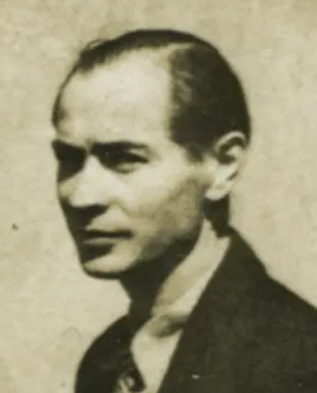
Josef Kowner arround 1930
|
|
|
|
|
|
|
|
|
|
|
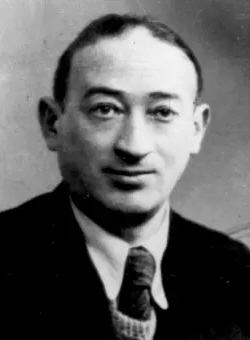
Joachim Weingart – arround 1935
|
|
|
|
|
|
was born in 1895 in Drohobych, then part of
Austria-Hungary, now Ukraine. He studied in Weimar,
Vienna, and Berlin. In 1923, he moved to Paris and
is today considered one of the most renowned
painters of the École de Paris.
After the German occupation of France in June 1940,
Weingart, as a Jewish artist, was stripped of his
rights and economically isolated. In March 1942, he
was arrested by the Gestapo in his Paris studio and
initially sent to the Pithiviers internment camp. On
July 17, 1942, he was deported to Auschwitz-Birkenau
on Transport No. 6, where he was murdered.
|
|
|
|
|
| |
|
|
|
|
|
|
|
|
|
The exhibition
“State Art in Baden 1918–1933” was the
he unfortunate culmination of a cultural struggle in
Karlsruhe that had already begun shortly after Hans
Thoma was appointed director of the Badische
Kunsthalle in 1919. It was Thoma’s pupil, Hans Adolf
Bühler, from near Lörrach, who, as a professor at
the art academy, fueled the fight against modern art
for many years.
As an avowed anti-Semite and member of the NSDAP
already appointed in 1932 as director of the art
academy, he was also named director of the Badische
Kunsthalle on March 11, 1933. His predecessor, Lilli
Fischel, was “placed on leave” the same day. In
April 1933, Bühler organized one of the very first
exhibitions in which modern artists were defamed as
“degenerate.”
|
|
|
|
|
|
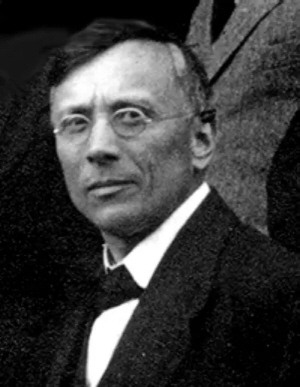 Hans Adolf Bühler – 1923
|
|
|
|
|
| |
Looking ahead: in February, we will
present two female artists who were very well known in the 1920s and
1930s but are now practically forgotten. The theme for February will be:
“Lilli Fischel – the first woman to head a State Art Gallery in Germany.” |
|
|
|
Dr. Beatrix Früh
Dipl.-W. Ing. Stefan Schmitt
The Virtual Museum in Karlsruhe
August-Bebel-Straße 34
D-76187 Karlsruhe / Germany
Tel: +49 721 75 69 300
Email: info@lostgen.art
Lost Generation Art © 2026
|
|
|
|
|