
This Topic of the Month is not dedicated to the life paths of specific individuals documented through biography. Rather, it centers on a broader perspective: We examine the root causes, historical mechanisms, and profound conditions that force people into exile in the first place. It is an attempt to understand how displacement functions as a system and what it means structurally for art when it is robbed of its homeland.
1. Art as a Refuge in a Foreign Land
Arts in exile represent one of the most painful yet fascinating facets of global cultural history. When dictatorships, totalitarian regimes, wars, or political persecution force people to flee their homelands head over heels, their entire lives collapse from one day to the next. They lose not only their homes but often their identity, social security, and familiar surroundings. Yet, while the physical existence of these individuals is severely threatened, creative production remains a powerful tool of inner resistance and emotional survival. For many exiled artists, artistic work in a foreign land becomes the only way to preserve their dignity and to confront the oppressors back home with an unmistakable voice or a visible image. Art thus becomes a sanctuary where experienced trauma can be processed and preserved.
2. Between a New Beginning and Isolation
However, creative work under the extreme conditions of exile is marked by deep rifts, fractures, and painful challenges. The loss of one's native language, the confrontation with a completely foreign culture, the lack of a familiar audience, and often the absence of even the simplest working materials—such as canvases, paints, or paper—present cultural creators with existential hurdles. The paths through exile are as diverse as they are tragic: While a select few manage to painstakingly reinvent themselves in their new environment and even develop groundbreaking, entirely new forms of expression through the influence of the foreign culture, many others fail due to bitter isolation. They fall into poverty abroad, sink into obscurity, or are ultimately caught up by the terror of their persecutors after all.
3. Art as a Memorial to the Lost Homeland
Art in exile is never merely about aesthetics or decoration. It is always a timeless, historical memorial to the extreme fragility of human freedom and democracy. The works of the displaced painfully reflect the loss of the place that once provided safety, inspiration, and identity. This art keeps the memory of a homeland alive that often no longer exists—whether because it was physically destroyed, politically perverted, or irrevocably lost to the creators. The material or conceptual images that emerge in a foreign land thus become preserved fragments of heritage. At the same time, this art provides undeniable proof of the unyielding power of the human spirit, which refuses to be silenced even in humanity's darkest times. The works created abroad, or those that preserve their memory, close painful gaps in our collective memory. They compel us to look closely and to protect the legacy of those whose voices, visions, and homelands were meant to be erased from history.
4. From Refugee to “Enemy Alien”
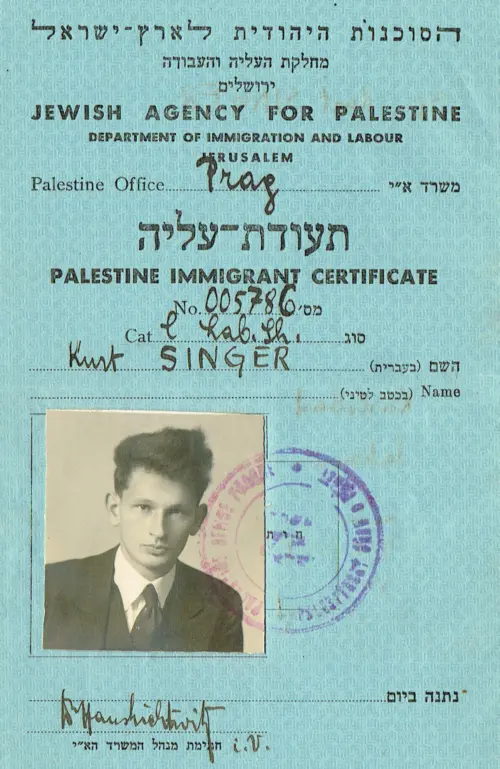
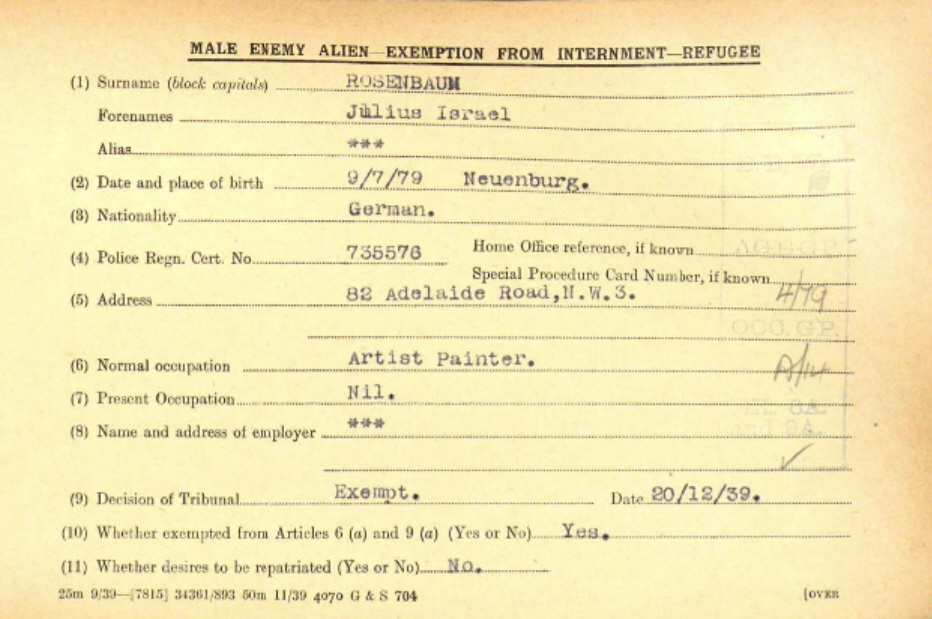
The bitter irony of exile often struck Jewish refugees from Germany with full force after their successful escape. In many countries of refuge—most notably Great Britain—the outbreak of World War II suddenly saw them classified as 'Enemy Aliens.' Instead of the hoped-for freedom and safety, a total of around 27,000 people faced internment behind barbed wire, often in hastily erected camps. Approximately 80 percent of those affected were Jewish refugees who had actually sought protection from Hitler. Artists were treated no differently by the authorities than the general population.
A tedious, bureaucratic process followed, in which individuals had to fully disclose their reasons for fleeing and prove they were not spies for the Nazi regime. The mistrust of the host countries imposed a massive psychological burden on those affected. It not only delayed their social integration but also paralyzed all artistic creation in exile for months."