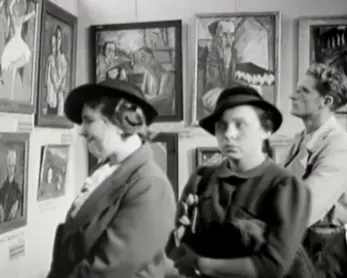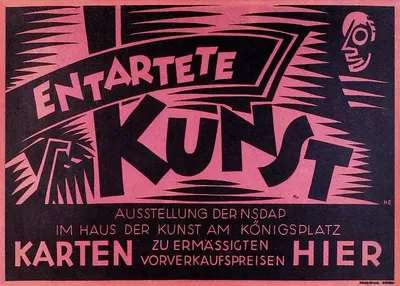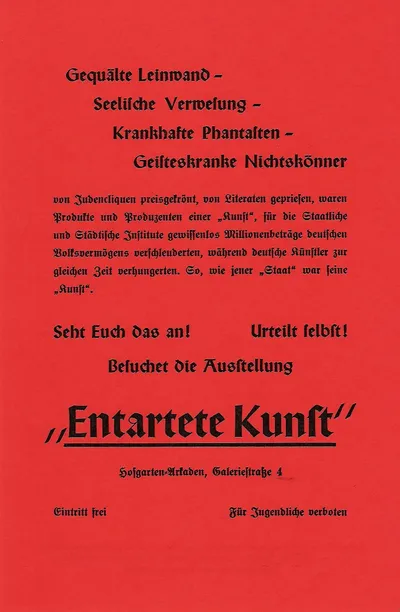

The exhibition „Degenerate Art“, which opened on July 19, 1937, in the arcades of Munich’s Hofgarten, marked both the the moral low point and a turning point in Nazi cultural policy. It was conceived as a denunciation show, intended to publicly shame, defame, and permanently remove modern art of the Weimar Republic—what the regime called “degenerate art”—from the German art world.
The main goal of the exhibition was to manipulate the public in line with Nazi ideology. The regime portrayed works by artists such as Max Beckmann, Ernst Ludwig Kirchner, Oskar Kokoschka, Emil Nolde, Marc Chagall, and Pablo Picasso as “un-German”, “Jewish Bolshevik” and “degenerate.” The presentation was deliberately chaotic and intimidating: paintings were hung close together and at odd angles, often without frames, accompanied by mocking captions and price tags that denounced the alleged “costs” to the German people.
The propagandistic effect was heightened by a direct comparison: only a few meters away, in the newly opened “House of German Art,” the regime simultaneously presented the “Great German Art Exhibition.” There, art defined as “healthy” and “German” was showcased—naturalistic, heroic depictions of farmers, soldiers, and idealized landscapes—promoted as the only true artistic ideal.
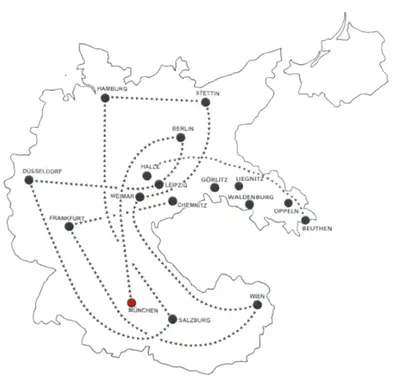
The “Degenerate Art” exhibition was an enormous success in terms of Nazi propaganda, attracting more than three million visitors in Munich. It later toured major cities such as Berlin, Leipzig, Salzburg, and Vienna. The show served as a pretext for a nationwide confiscation campaign during which more than 20,000 works were removed from over 100 German museums. Many of these artworks were subsequently sold on the international art market or destroyed.
The exhibition marked the end of artistic modernism in Germany. Artists whose works were labeled “degenerate” were banned from practicing their profession; many were forced into exile or became victims of persecution. Thus, the “Degenerate Art” exhibition was not merely an art show, but a central act of cultural cleansing—and a tragic chapter in the history of censorship in Germany.
The trial run for this exhibition actually took place as early as April 1933 at the Baden Art Museum in Karlsruhe. At the time, the Karlsruher Zeitung reported on its front page about the “Chamber of Horrors of Art”. The chaotic presentation of the works and the disparaging commentary accompanying them served as the blueprint for the Munich exhibition. “The Chamber of Horrors of Art” will be the topic of the month in January.
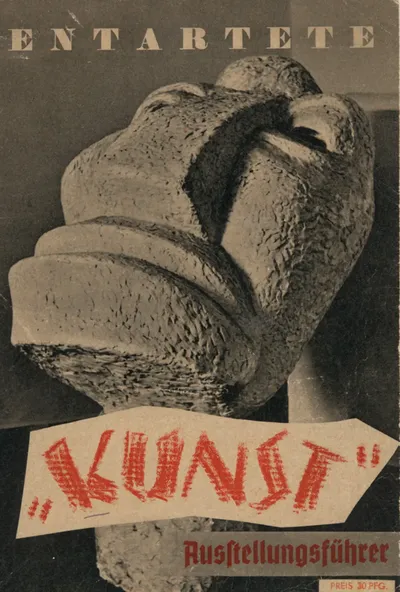
Below is the original exhibition guide that was published in the summer of 1937 before the opening of the traveling exhibition “Degenerate Art” in Munich. The person responsible for its content was the painter Fritz Kaiser, who at that time served as Gaukulturwart (regional cultural administrator) in Baden. He was born in Villingen and studied at the Academy of Fine Arts in Karlsruhe. The catalog is an important historical document that exemplifies the insidious ways in which modernist artists were attacked by Nazi propaganda, while simultaneously documenting the ideological aims of National Socialist cultural policy.
Exhibition Guide “Degenerate Art” (1937)
Digitized version of the 1937 original by lostgen.art
Note: This catalog is in the public domain.