
Professional Experience
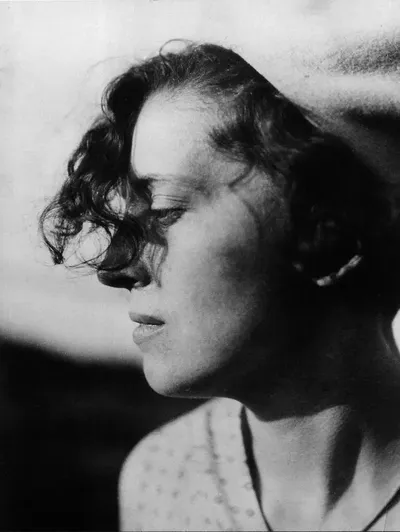
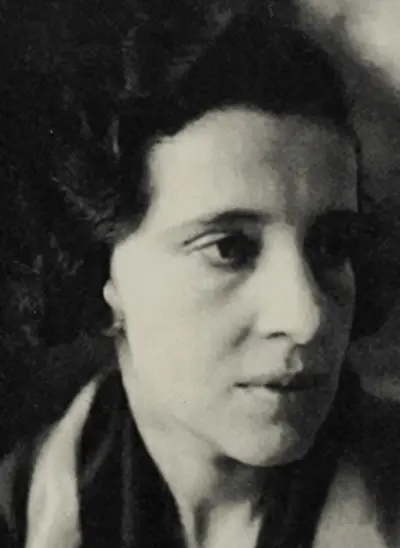
Lilli Fischel (1891–1978) was placed on retirement on June 8, 1933, and dismissed from the civil service as the tenured director of the Staatliche Kunsthalle Karlsruhe effective September 30, 1933, with the loss of all pension rights. This was justified on the grounds that, as a "half-Jew" and "Mischling of the first degree," she was to be dismissed based on the "Law for the Restoration of the Professional Civil Service" of April 7, 1933.
Subsequently, she left Germany and worked in Paris from May 1, 1934, to July 31, 1939, as a private secretary and scholarly expert for the renowned art dealer Paul Tiocca. After France declared war on the German Reich on September 3, 1939, in response to the invasion of Poland, Lilli Fischel returned to Germany in the fall of 1939. She had to expect that, following the declaration of war, she would be interned in France as an "enemy alien."
Beginning on March 22, 1940, she lived in Munich and opened an art dealership, which she operated there until 1947. As of January 1, 1952, Lilli Fischel returned to her residence in Karlsruhe, where she was hired by the Staatliche Kunsthalle on January 15, 1952, as an exempt employee (non-tariff employee). Effective September 1, 1952, she was reinstated as a tenured civil servant for life.
The application for restitution
As Lilli Fischel was residing in Munich as of the qualifying date of January 1, 1947, her application for restitution had to be filed with the Bavarian State Office for Restitution (Bayerisches Landesamt für Wiedergutmachung). She submitted this application on August 15, 1950, asserting claims for "damage to professional advancement" as well as "insurance and pension loss." Since Lilli Fischel's claims originated in the State of Baden, the Bavarian State Office for Restitution, after review in late 1950, forwarded her application to the State Restitution Authority in Karlsruhe (Staatliche Wiedergutmachungsbehörde Karlsruhe). The latter documented the receipt of the application on January 13, 1951.
On January 26, 1951, Lilli Fischel wrote to the authority:
„I was already able to inform you in person that, due to current unfavorable economic circumstances, there is a need for my applications to be settled promptly. I would be grateful if it were possible to take this need into account.“
The authority in Karlsruhe then took more than a year to determine that it lacked jurisdiction, and on May 30, 1952, it returned all documents to the Bavarian authority. In August 1952, however, the Karlsruhe authority determined that it did, in fact, have jurisdiction and requested the records back from the Bavarian authority. By letter dated November 3, 1952, the restitution authority in Karlsruhe then rejected Lilli Fischel’s application for restitution on the grounds that the application had only been received in Karlsruhe on January 13, 1951—after the filing deadline had expired—and that the records contained no indication of when Lilli Fischel had filed her application with the Bavarian restitution authority.
Subsequently, on December 5, 1933, the Public Prosecutor at the District Court of Karlsruhe intervened, pointing out in a letter to the restitution authority that Lilli Fischel’s forced retirement on June 8, 1933, was a measure of National Socialist persecution and that the resulting sustained economic damage was substantial. He further noted that Lilli Fischel had received no restitution payments, even two and a half years after filing her application. On April 14, 1953, the authority's litigation department (Prozessreferat) finally determined that Lilli Fischel had indeed filed her application with the Bavarian restitution authority within the deadline, and therefore her application could not be rejected due to late submission in Karlsruhe.
On September 22, 1953, instructions were issued to the registry to "re-file" Fischel's file. This meant that the application could now be processed further. On February 3, 1954, Lilli Fischel received a notice awarding her a restitution amount of 2,065 DM. This amount, however, was incorrect because a calculation error had occurred in which Reichsmark and DM were confused for one of the items. In the meantime, Lilli Fischel, through her legal representative—the Public Prosecutor at the District Court—had filed a lawsuit against the restitution authority and pointed out the calculation error. On March 26, the authority's litigation department determined that the amount was indeed incorrect and that the notice had to be reviewed by April 15; otherwise, Lilli Fischel would also file suit against this notice. On April 5, 1954, Lilli Fischel received a corrected notice for 5,866 DM, which, however, only covered her claims up to September 1946.
In mid-1946, the then-director of the Kunsthalle, Kurt Martin, verbally offered Lilli Fischel continued employment, which she declined in writing on September 5, 1946, on the grounds that she was currently working on an important research project. At that time, she was unaware that she was thereby waiving her pension entitlements until her reinstatement as a civil servant on September 1, 1952. On June 11, 1956, the Baden-Württemberg Ministry of Education and Cultural Affairs also recognized the period from September 1, 1946, to August 31, 1952, as "pensionable" service. Consequently, on July 3, 1957, she had the Public Prosecutor file another lawsuit against the Office for Restitution. On December 12, 1957, the Public Prosecutor received a new notice from the State Office for Restitution, in which the total restitution amount was increased from 5,866 DM to 11,147 DM. This amount would correspond to a purchasing power of approximately 100,000 euros today.
The Public Advocate
It was only through the persistent commitment of the Public Advocate and repeated lawsuits that the authorities were finally forced to admit their omissions and to recognize the lasting damage to Fischel’s professional biography through a corrected payment. After all, the proceedings were free of charge for the claimants, as the Public Advocate was not a private individual but a state judicial body within a specially created authority—often attached to the district courts—designed to protect the interests of the aggrieved in the restitution process.
Since he acted as an organ of the administration of justice, his services remained entirely free for those affected. This exemption from fees was of crucial importance for many victims of persecution, as they were often destitute after the war and emigration and could not afford private legal counsel. In this capacity, the Public Advocate took on a dual role as an "advocate of the law": while he was tasked with fending off unjustified claims, he was simultaneously obligated to actively assist victims in asserting their legitimate demands against the often obstructive compensation authorities.
Conclusion
Knowing Lilli Fischel's history, the matter is quite clear. However, reading the lines above, one wonders: was this incompetence or was it intentional? Since we are aware of several other cases in which this pattern repeats itself, one must conclude: the case of Lilli Fischel illustrates the systematic failure and bureaucratic harshness of the restitution authorities in the early Federal Republic toward those persecuted by the Nazi regime. Seven years after her application in 1950—and despite blatant official errors and stalling tactics—the art historian, who had been dismissed from the civil service in 1933 as a "half-Jew," only received late compensation in 1957 after a hard-fought legal battle. This years-long procedure was characterized by jurisdictional disputes between offices, calculation errors, and the ignorant rejection of legitimate claims, which massively exacerbated the psychological and economic burden on the victim. Lilli Fischel passed away at the age of 87 on December 28, 1978, in Karlsruhe.
- Part 1 - Her Struggle for Professional Recognition
- Part 2 - Her Struggle for Modern Art
Sources
The information above is based, among other sources, on Fischel’s restitution file, which can be found at the General State Archive in Karlsruhe under the reference number GLA 480-13186.
Notes on the Above Portrait of Lilli Fischel