
Head of the Kunsthalle Karlsruhe (1927–1933)
Following the death of Willy Storck in 1927, Lilli Fischel (1891–1978) took over as acting director of the Staatliche Kunsthalle Karlsruhe. During this period, which lasted until 1933, she was fully responsible for both the operational and scholarly leadership of the institution. Alongside her management of the collection, Fischel pushed forward the academic cataloging of the Old German masters. Her research on medieval painting of the Upper Rhine, particularly the 'Karlsruhe Passion,' was the central focus of her art-historical work during these years. Her curatorial focus lay in consolidating the modern art department, continuing the acquisition policy initiated by Storck with an emphasis on French Realism and Impressionism.
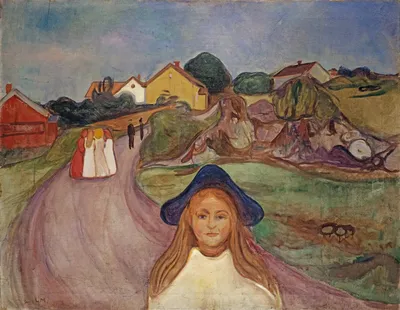
The acquisitions of Hans von Marées’ 'Family Portrait II' and Edvard Munch’s 'Street in Åsgårdstrand' became the primary targets for Völkisch and Nazi criticism directed at Lilli Fischel. Through these purchases, Fischel found herself in the crosshairs of a far-right opposition in Baden that had already begun gaining strength in the late 1920s. The purchase of the Munch painting, in particular, was interpreted as a lack of national consciousness and a waste of public funds during the economic crisis. While she defended 'Street in Åsgårdstrand' as an essential testament to European Expressionism, her opponents stigmatized the painting as an expression of an 'alien-raced' and 'pathological' understanding of art."
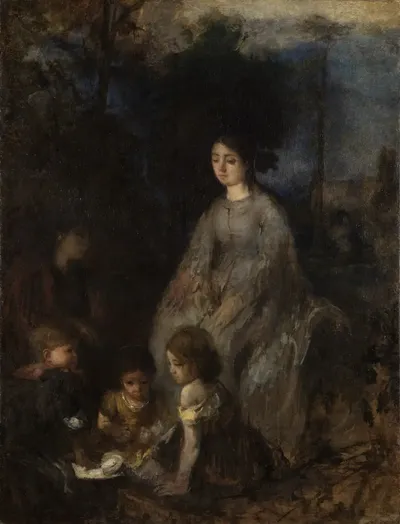
Marées’ 'Family Portrait II,' which Fischel acquired in 1930, was not spared either. Although Marées is considered a classic today, Fischel’s preference for the 'Deutsch-Römer' (German-Romans) circle and the associated intellectual aesthetic—which moved away from purely naturalistic painting—was defamed as elitist and 'alien to the people' (volksfern). The attacks against her became increasingly personal and ideologically motivated: she was accused of pursuing a 'Jewish-Marxist' art policy at the expense of the Baden taxpayer. A central aspect of the campaign against Lilli Fischel was the allegation of a 'one-sided' and 'un-patriotic' acquisition policy that supposedly led to the impoverishment of local Baden artists. However, during the Great Depression starting in 1929, Lilli Fischel responded to the existential plight of the Karlsruhe artist community by organizing a soup kitchen for needy artists within the Kunsthalle. Yet, this initiative was later denounced by Völkisch circles as a politically motivated misuse of the state institution. She was accused of merely putting off the local art scene with 'alms' instead of supporting them through systematic acquisitions.
These campaigns, fueled primarily by the Nazi press and local figures such as Hans Adolf Bühler, aimed to professionally discredit Fischel and make her position as acting director untenable. The targeted defamation of her modern collection and research concepts provided the immediate basis for her summary dismissal in the spring of 1933. On March 11, Lilli Fischel was 'placed on leave' with immediate effect and was officially retired as of April 7.
Exile in Paris (1933–1939)
Immediately after her dismissal, Lilli Fischel emigrated to Paris—primarily because she had lost her professional and social standing as a 'Mischling' (of mixed Jewish descent) and 'non-Aryan' after being removed from the civil service. The 'Law for the Restoration of the Professional Civil Service,' enacted on April 7, 1933, provided the legal mechanism to remove her based on her heritage and alleged 'political unreliability.' For a woman in such a prominent position as the de facto director of a state institution, this meant the immediate end of any legal employment opportunities within the German cultural sector. Furthermore, Lilli Fischel had been personally attacked for years in the Nazi press, particularly in the Karlsruhe propaganda organ 'Der Führer.' This public branding as a 'Jewish-Marxist' official caused significant psychological distress and social ostracization, carrying the constant threat of escalating into physical violence.
In the French metropolis, she succeeded in rebuilding her professional life within the private art trade. She found employment with the renowned art dealer Paul Tiocca, serving as a private secretary and a scholarly expert. In this role, Fischel was responsible for the cataloging, appraisal, and authentication of artworks. Her position with Tiocca was far more than just economic security in exile; it provided her with a vital platform to apply her art-historical expertise on an international level and to maintain access to major European collections, while all scholarly activity was forbidden to her in Germany. Under a pseudonym, she continued to publish art-historical contributions in international journals.
Alongside her work in the art trade, Fischel utilized the Parisian museum and archive landscape, particularly the Louvre, for her private research on Old German and French painting. Despite her precarious legal status as an emigrant, she succeeded in deepening her methodological work in the field of stylistic criticism and maintained intellectual exchanges with other exiles. However, this phase in Paris ended with the onset of World War II.
Return to Germany (1939–1945)
Immediately following the German invasion of Poland in September 1939, German nationals in France were classified as 'Ressortissants ennemis' (enemy aliens). As a result, Fischel lost her status as a tolerated emigrant and faced the prospect of being sent to an internment camp. Since she had no means of traveling to a safe third country, she returned to Germany. Starting in 1940, she built a new life in Munich, and by 1941, she was once again earning an income in the art trade.
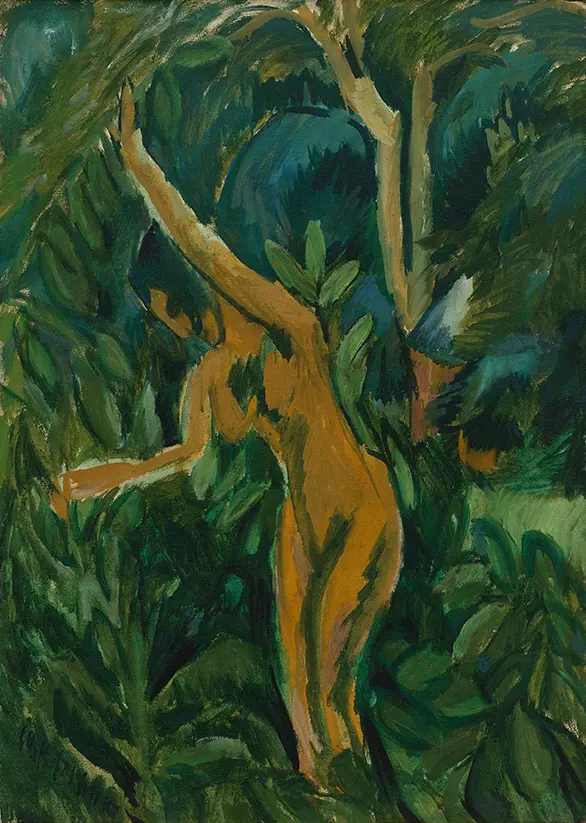
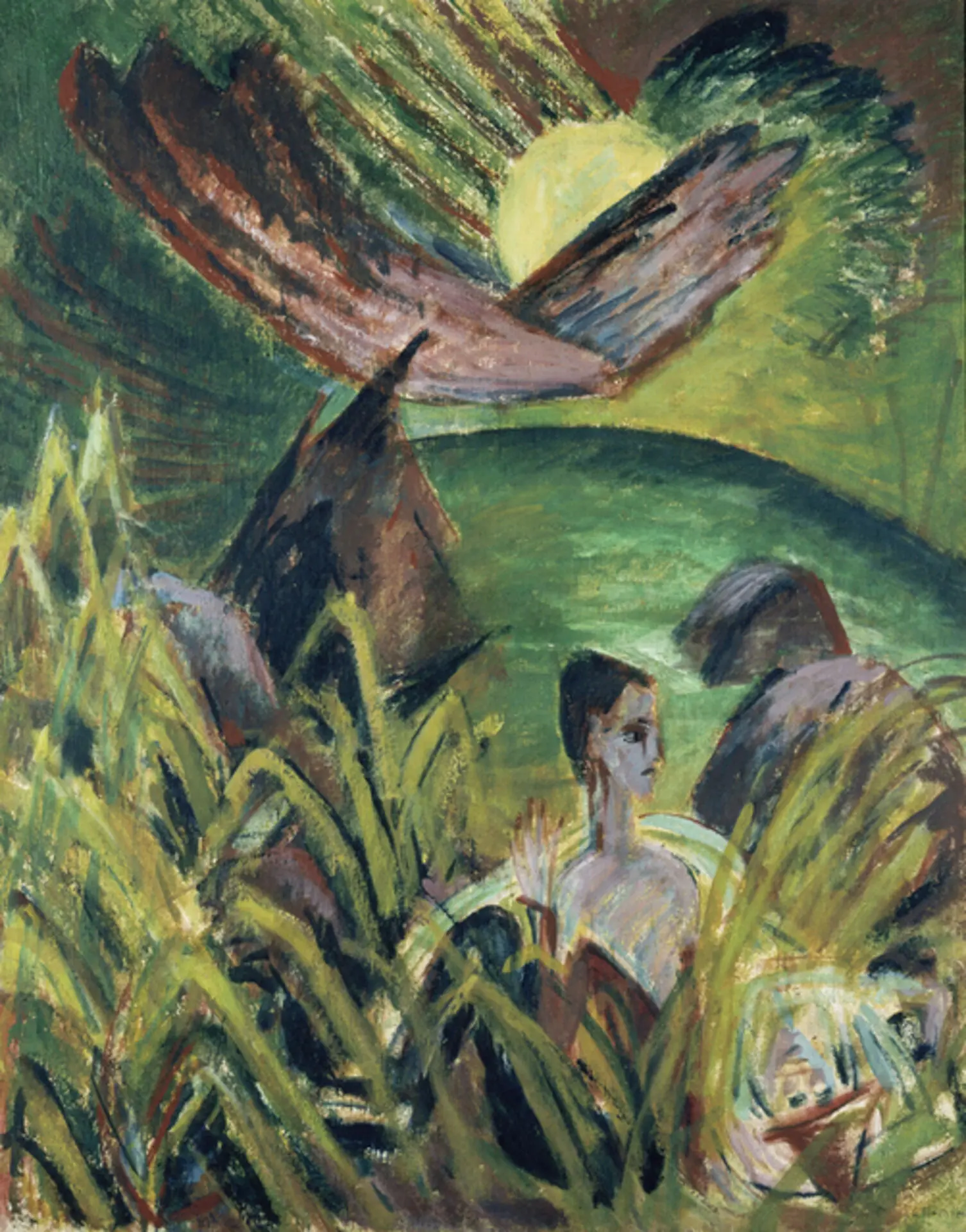
In doing so, Lilli Fischel operated in a gray area. According to Katrin Engelhardt’s dissertation (Hamburg 2013), Fischel was already in contact with Berlin art dealer Ferdinand Möller by 1940. Möller was among the few select dealers commissioned by the Nazi Ministry of Public Enlightenment and Propaganda to liquidate works confiscated from German museums as 'degenerate.' As late as 1944, Fischel specifically inquired with Möller about paintings by Ernst Ludwig Kirchner, including works such as 'Moonrise on Fehmarn' (1914) and 'Woman in Green' (1914), which were listed as consignment goods of the Propaganda Ministry. Both works had been forcibly removed in 1937 as part of the 'Degenerate Art' (Entartete Kunst) campaign from the Museum Folkwang in Essen ('Moonrise') and the Stettin City Museum ('Woman in Green'). Formally speaking, Fischel was brokering works that the state had plundered from museums to private buyers. Since modern art was officially considered 'proscribed' (verfemt), dealing in it served as an economic survival strategy for Fischel on one hand, and on the other, as a way to secure cultural property in private hands, protecting it from potential destruction or export abroad.
However, this raises a completely different question: How was Lilli Fischel, as a so-called 'Mischling of the first degree' subject to a professional ban, able to remain unmolested in her art dealings for the six years from 1939 to 1945? Most likely only because she, as a recognized expert on modern art, was seen by the Nazi cultural authorities as a means to monetize works confiscated from museums. This is also supported by the fact that Fischel’s application for membership in the Reich Chamber of Culture was approved in 1942. While one might condemn Fischel’s involvement from a high moral standpoint today, it should not be overlooked that it was precisely this course of action that ultimately ensured her economic survival.
- Part 1 - Her Struggle for Professional Recognition
- Part 3 - Her Struggle for Restitution
Sources
The information above is based, among other sources, on Fischel’s restitution file, which can be found at the General State Archive in Karlsruhe under the reference number GLA 480-13186. Additional sources include Katrin Engelhardt’s dissertation titled 'Ferdinand Möller and his Gallery – An Art Dealer in Times of Historical Upheavals' – University of Hamburg, 2013.
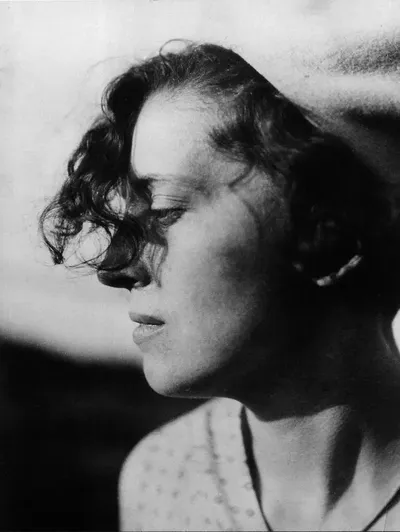
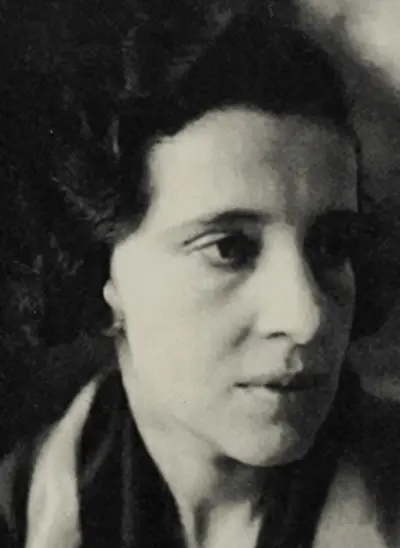
Notes on the Above Portrait of Lilli Fischel