|
|
Newsletter
May / June 2026
|
|
|
|
|
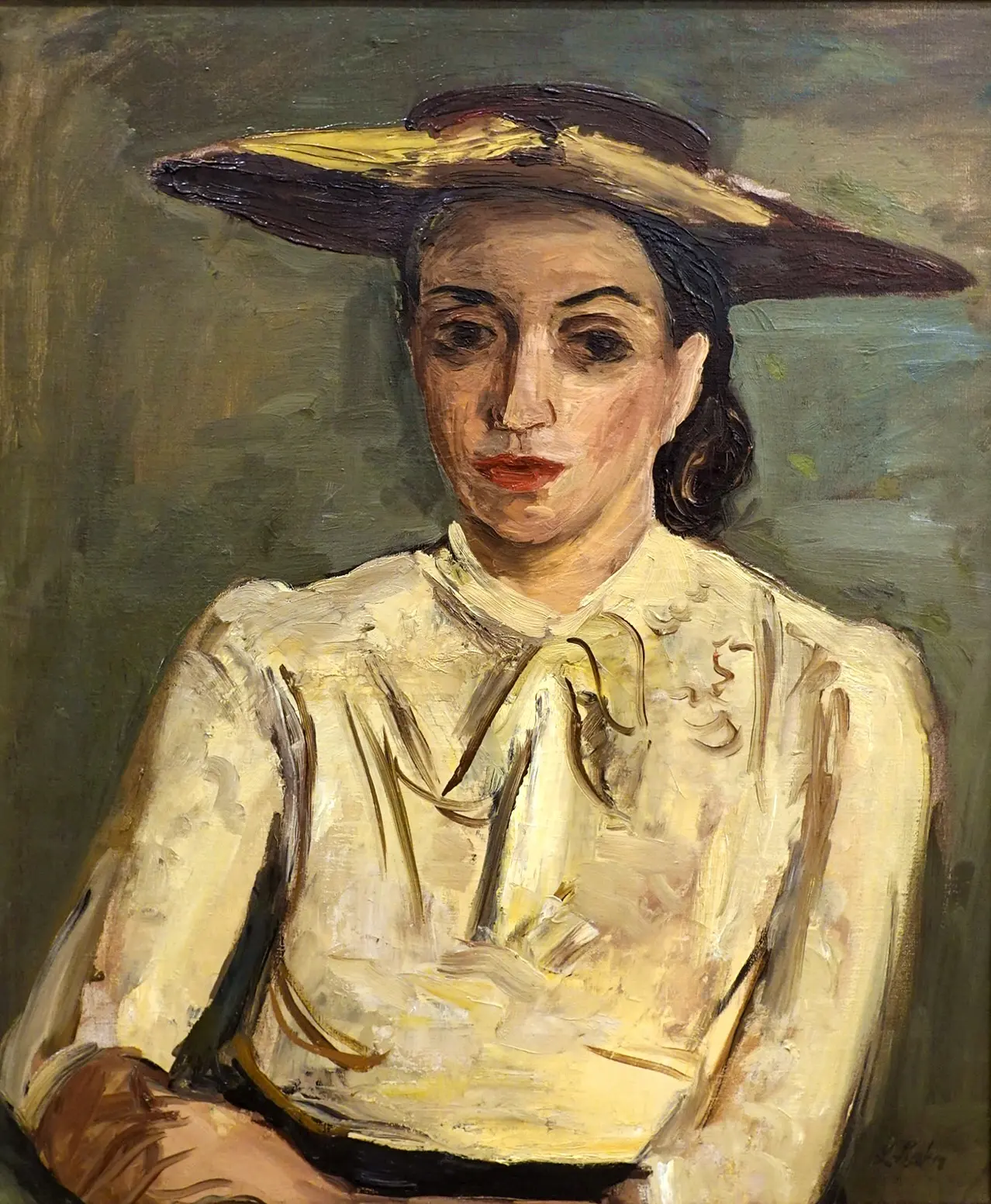
Leo Kahn - Lady with a Black Hat
c. 1945 -> Click image to enlarge
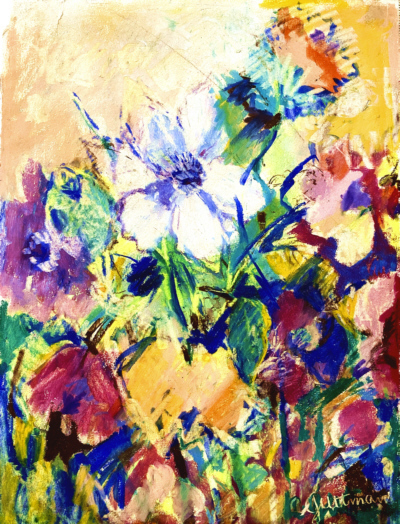
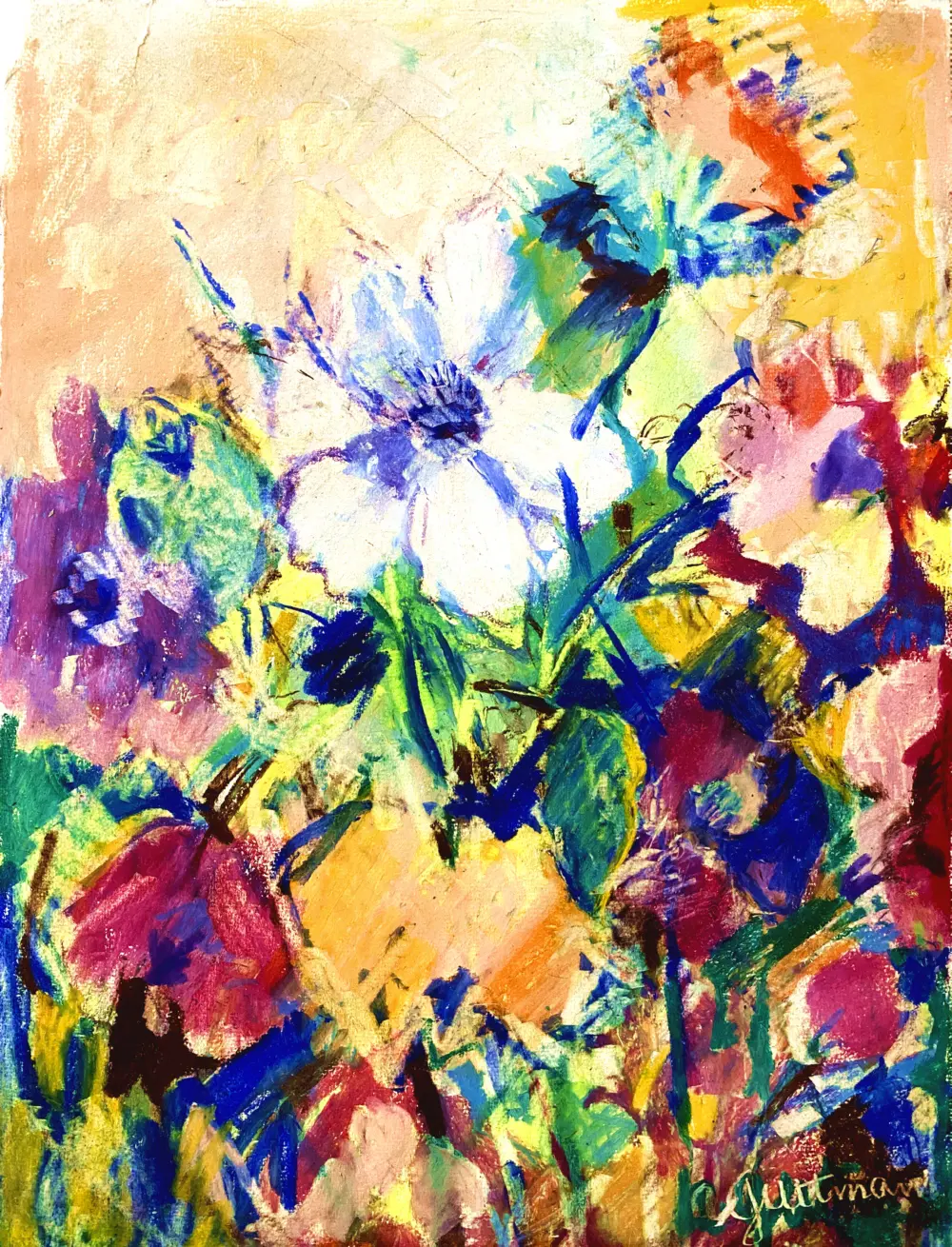
Robert Guttmann - Flower Landscape
c. 1930 -> Click image to enlarge |
|
|
|
|
|
|
We discovered this impressive painting by the Bruchsal-born artist Leo Kahn in a gallery in Tel Aviv. It was created in the mid-1940s and shows Kahn at the peak of his artistic mastery. In 1950, he served as the official representative of Israel at the Venice Biennale. In 1952, he was honored with the prestigious Dizengoff Prize, Israel's most significant award for the visual arts, named after Meir Dizengoff, the first mayor of Tel Aviv and founder of the Tel Aviv Museum of Art.
This colorful pastel by the Prague-born painter Robert Guttmann surfaced in Rostock this spring. It is one of the few of his works that have survived. Guttmann was a coffee-house painter who created his pictures on-site, selling them there or using them to settle his tab. As the marginal perforations show, our piece also comes from a sketchbook that Guttmann always carried with him. Thus, our work is likely a "coffee-house product" as well. Guttmann's painting style was naïve, which was a novelty at the time; as a result, he was not taken seriously by the established art world. We are delighted to have acquired one of his rare works and to be able to present this extraordinary individual here.
|
|
|
|
|
|
|
|
|
|
|
|
|
|
|
|
|
|
|
|
|
|
|
|
|
Due to his eccentric clothing and unusual hairstyle, he was the most photographed and portrayed person in Prague. He was a fervent Zionist and traveled on foot to the congresses in Basel, London, and The Hague. In 1932, the physician Dr. Arthur Heller published a psychological study on Guttmann. While the public mocked the painter as a mere "figure of fun," Heller was fascinated by his unshakable self-confidence. He scientifically examined how Guttmann, despite poverty and marginalization, was able to maintain such a strong, almost messianic identity. After his deportation to the Litzmannstadt (Łódź) Ghetto, Robert Guttmann died of starvation in 1942, after five months in the ghetto.
|
|
|
|
|
|
|
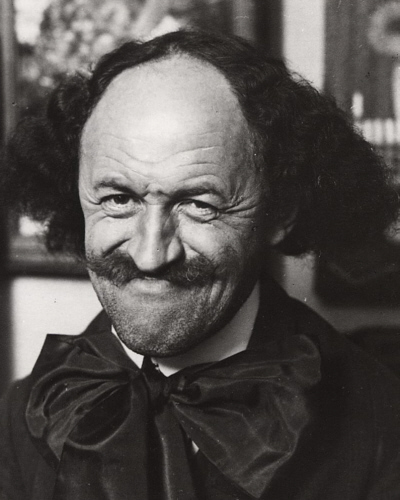
Robert Guttmann c. 1930
|
|
|
|
|
|
|
|
|
|
|
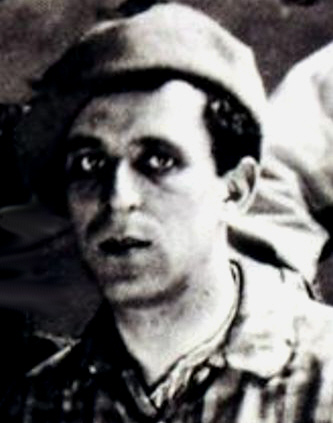
Leo Kahn 1928
|
|
|
|
|
|
He was a native of Bruchsal and a prominent painter of Expressive Realism. An artistic testament to his work in his hometown was the mural painting of the synagogue, created before he fled to Palestine with his wife and four children in 1936 due to Nazi persecution. His style was strongly influenced by Paul Cézanne and was characterized by a vibrant luminosity in his landscapes and portraits. In Israel, he founded the country's first textile printing factory, a venture that failed and caused him to lose his entire fortune. He continued to work there as an employee and, after retiring from his professional career, lived in the artists' colony of Safed until his death. Since most of his works were destroyed by the National Socialists, his few surviving German pieces have become rare testaments to his early oeuvre.
|
|
|
|
|
| |
|
|
|
|
|
|
|
|
|
Lilli Fischel - Part 3: Her Struggle for Restitution
Following the director’s death in 1927, Lilli Fischel took over the leadership of the Staatliche Kunsthalle Karlsruhe. Continuing a modern acquisition policy, she quickly came under fire from völkisch circles, which heavily criticized her acquisitions of contemporary and international art. Immediately after the Nazi seizure of power, she was dismissed from civil service in April 1933 due to her Jewish heritage and was banned from practicing her profession.
In the third and final part, we document the arduous path to justice through her restitution files. Grueling efforts were required to obtain compensation from the fledgling German state for the injustices she had suffered. After the end of the war, Lilli Fischel returned to service at the Kunsthalle Karlsruhe, where she worked as an employee until her retirement.
|
|
|
|
|
|
|
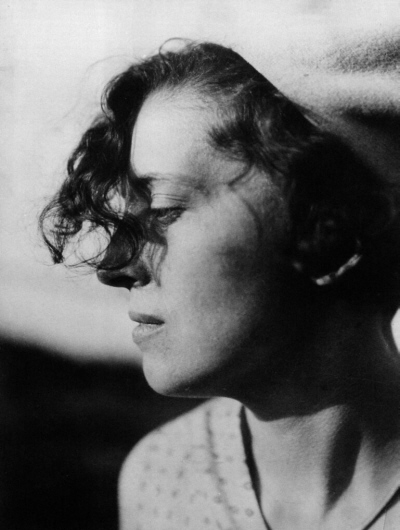
Lilli Fischel c. 1928
Foto Lucia Moholy © VG Bild-Kunst, Bonn 2026
|
|
|
|
|
| |
Outlook:
The next newsletter will be published in July. We will then present lithographs and drawings by the Viennese graphic artist Lili Réthi, as well as a painting by the artist Anne Anker Rothschild. The theme for the month of July will be: "Art in Exile."
|
|
|
|
Dr. Beatrix Früh
Dipl.-W. Ing. Stefan Schmitt
The Virtual Museum in Karlsruhe
August-Bebel-Straße 34
D-76187 Karlsruhe / Germany
Tel: +49 721 75 69 300
Email: info@lostgen.art
Lost Generation Art © 2026
|
|
|
|
|