Logo

February 2026
 
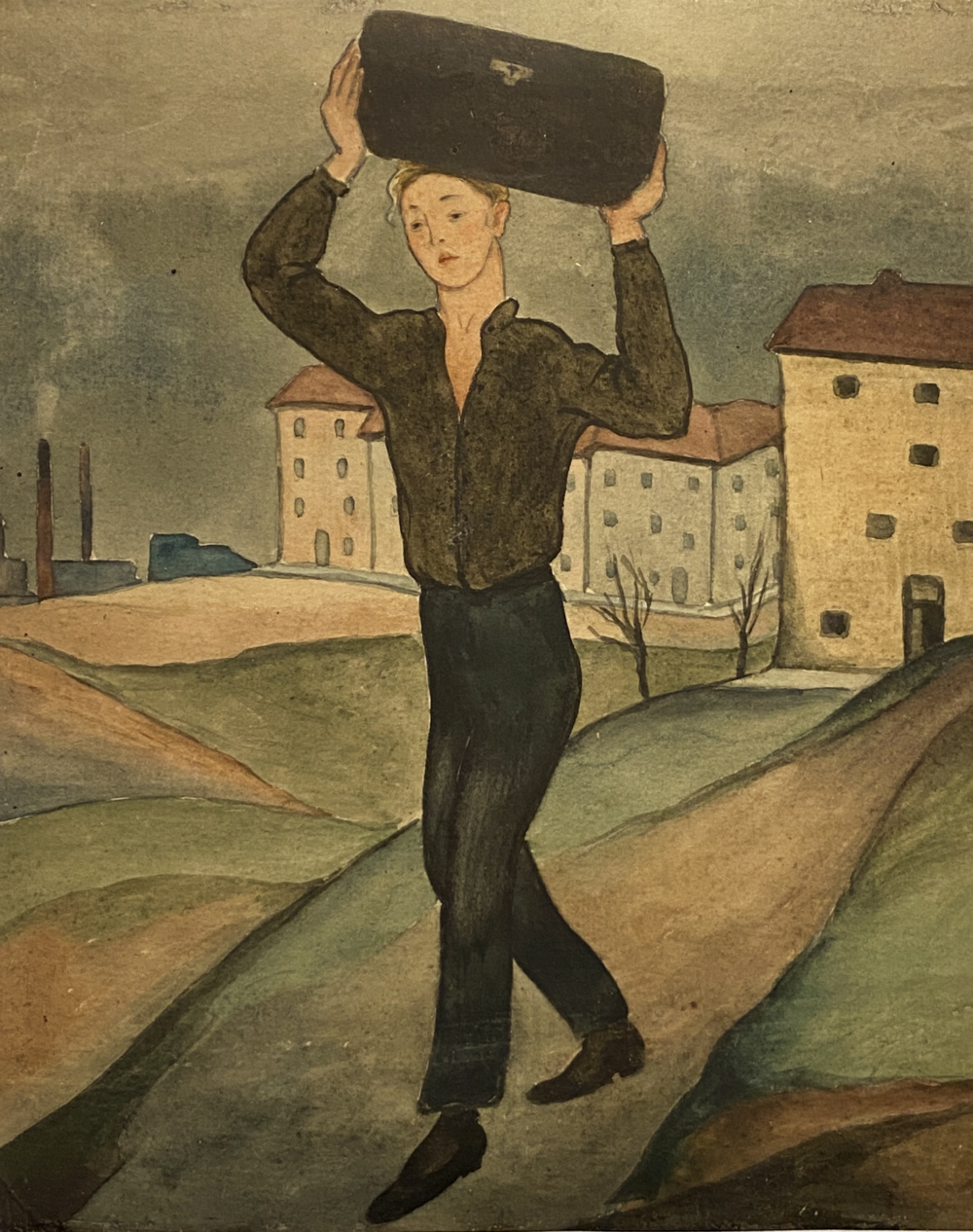
foto Dora Bromberger – Farewell – around 1930 -> Click image to enlarge
News

This watercolor was painted by the Bremen artist Dora Bromberger, sold by a dealer near Liverpool. The label from the framing company suggests that it arrived in England before 1940. The Bromberger family had good contacts in England, and several relatives fled to the island to escape the Nazis. Dora's brother Siegfried, who emigrated to Cuba via England in 1939, never understood why his two sisters did not take advantage of this opportunity.

The second artist we are commemorating today is the painter and graphic artist Rahel Szalit-Marcus. Originally from Lithuania, she lived in Munich and Berlin before being forced to flee to Paris to escape the Nazis. She was multilingual and illustrated many books. The piece we found in an antiquarian bookstore in Bayreuth is a signed lithograph featuring a self-portrait.

Rahel Szalit-Marcus

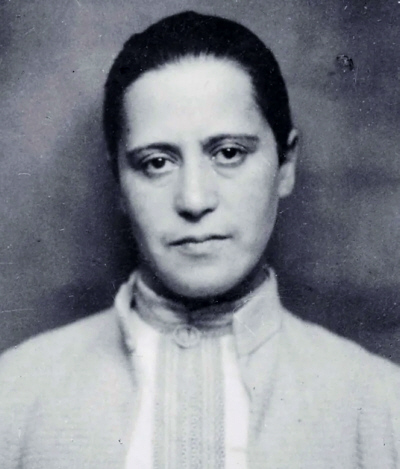
was born in 1888 in Telsiai, Lithuania, which was then part of the Russian Empire. She was a prominent Jewish artist of the Classical Modernism movement. In Weimar Republic-era Berlin, she gained recognition primarily for her illustrations of Jewish children's books, as well as works by well-known authors, such as Charles Dickens.

Following the suicide of her husband and her flight from Berlin to exile in Paris in 1933, she was arrested in her apartment in 1942 and deported to the Auschwitz extermination camp, where she was murdered upon arrival. A large portion of her work has been considered lost since the Nazi era.

learn more
foto
Rahel Szalit-Marcus – arround 1920
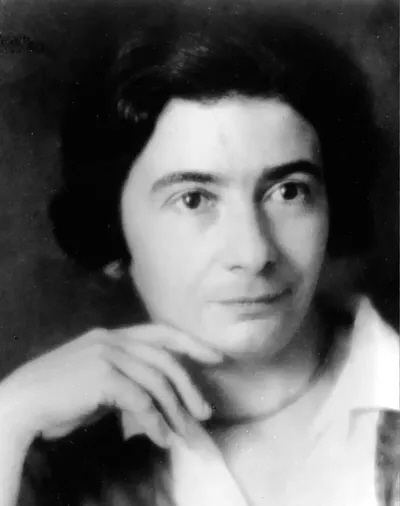
foto
Dora Bromberger – arround 1920
Dora Bromberger

was born in 1881 in Bremen. She completed her artistic training in Munich and Paris, where she developed her characteristic style of moderate Expressionism. As one of the most well-known Bremen painters of her time, she was firmly established in the regional art scene.

Despite her conversion to the Protestant faith in 1888, she was systematically forced out of public artistic life after 1933 due to her Jewish heritage. In 1941, Dora Bromberger was deported to the Minsk Ghetto along with her sister Henriette, and in 1942, she was murdered at the Maly Trostinez extermination camp. A large portion of her oeuvre was lost as a result of the 'Aryanization' of her family home.

learn more
Topic of the Month

Lilli Fischel and the Karlsruhe Kunsthalle was originally intended to be the only topic of the month. However, during our research, questions arose that prompted us to search through the primary sources at the General State Archives in Karlsruhe. In the process, we discovered documents that now provide enough material for three newsletters.

Lilli Fischel was the first woman in Germany to direct a State Art Gallery. As a woman, a person of 'mixed Jewish descent' (Halbjüdin), and an advocate for Modern Art, she provided her critics with plenty of room for attack. Her life was a constant struggle, which we will now report on in three parts:

1. The struggle for professional recognition
2. The struggle for modern art
3. The struggle for restitution
learn more
📷


Photo of Lilli Fischel

The photo cannot be displayed directly at this point.
Since VG Bild-Kunst demands licensing fees that exceed our budget, we have opted for external linking.

View photo at Frankfurt University

Source: Institute of Art History at Goethe University Frankfurt am Main

Looking ahead: In January, a signed etching by Auschwitz survivor David Friedmann surfaced in a second-hand shop in the Harz Mountains. His daughter Miriam, who lives in New York, has donated it to our collection. We will report on this, in our next newsletter. The Topic of the Month for March will be: Lilli Fischel – Part 2: "The Struggle for Modern Art".


Dr. Beatrix Früh
Dipl.-W. Ing. Stefan Schmitt
The Virtual Museum in Karlsruhe
August-Bebel-Straße 34
D-76187 Karlsruhe / Germany
Tel: +49 721 75 69 300
Email: info@lostgen.art

If you no longer wish to receive this newsletter, please click here or simply reply to this email.